
Activated Carbon for Gold Recovery: Coconut Shell Carbon Selection Guide for CIP, CIL and CIC
Release time:
2026-08-28
Author:
CarlCarbon
Source:
CarlCarbon
Abstract
Activated Carbon for Gold Recovery: Coconut Shell Carbon Selection Guide for CIP, CIL and CIC
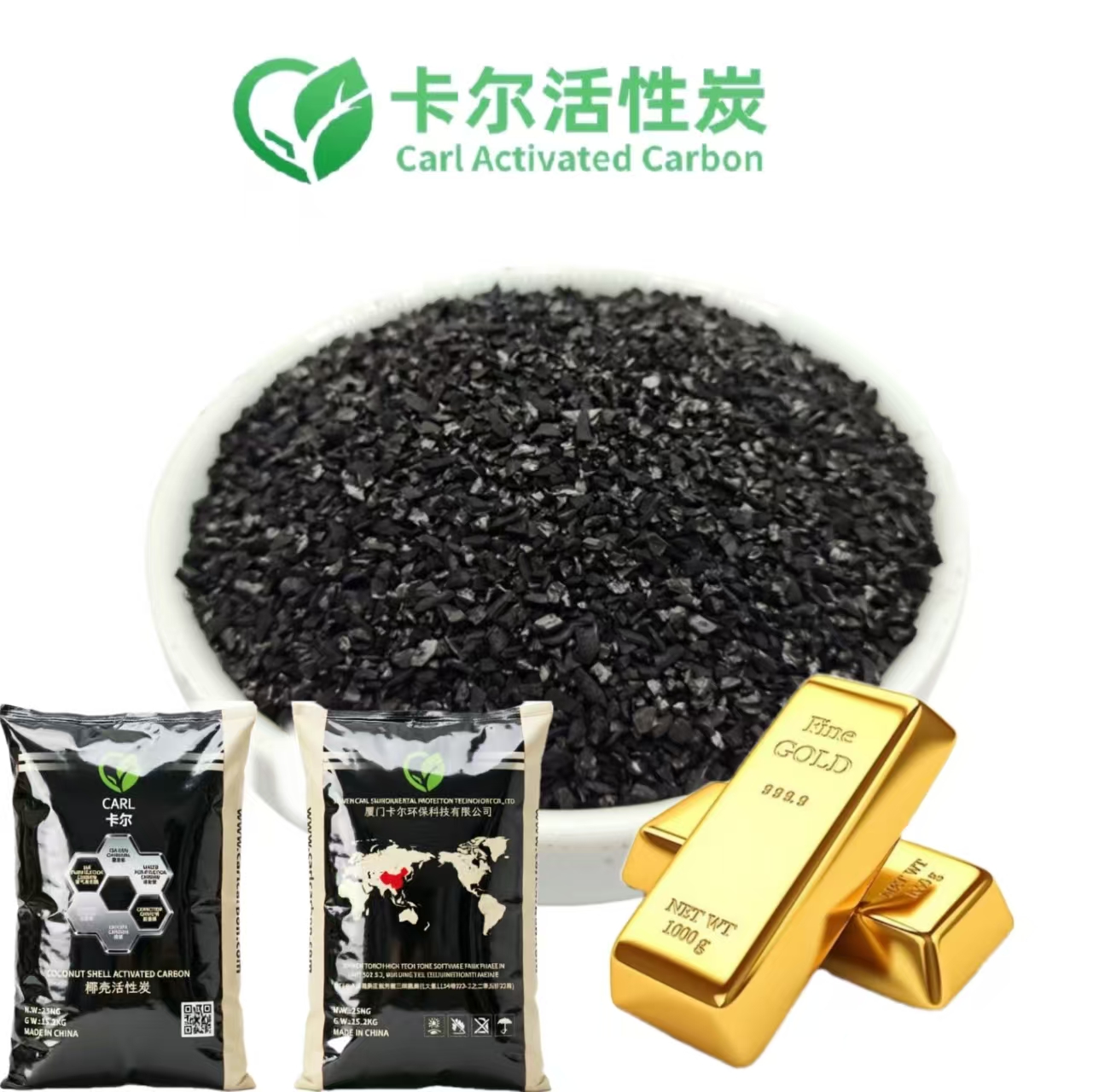 |  |
Activated carbon plays a critical role in modern hydrometallurgical gold recovery. After gold is dissolved into a cyanide solution, activated carbon is used to adsorb dissolved gold complexes and transfer them from the liquid phase into a concentrated carbon phase for subsequent elution and metal recovery.
Activated Carbon for Gold Recovery must therefore provide more than general adsorption performance. It needs suitable pore structure, rapid gold adsorption kinetics, high mechanical strength, controlled particle size, low attrition, and stable performance through repeated adsorption, elution, and regeneration cycles.
For these reasons, high-quality coconut shell activated carbon is widely used in Carbon-in-Pulp, Carbon-in-Leach, and Carbon-in-Column circuits. Its combination of developed pore structure, hardness, abrasion resistance, and regeneration capability makes it particularly suitable for demanding gold-processing environments.
However, selecting gold recovery carbon by iodine value alone can lead to poor results. Gold adsorption capacity, adsorption rate, mechanical strength, particle size distribution, ash content, attrition resistance, raw material quality, and process compatibility should all be evaluated together.
This guide explains how activated carbon recovers gold, how CIP, CIL and CIC systems differ, why coconut shell carbon is commonly preferred, which specifications deserve the most attention, and how to choose activated carbon for reliable gold recovery operations.
How Does Activated Carbon Work in Gold Recovery?
How Activated Carbon Recovers Gold is closely related to the cyanidation process used in many gold-processing plants.
During cyanide leaching, metallic gold is dissolved and forms soluble gold-cyanide complexes. The resulting gold-bearing solution is then contacted with activated carbon.
The porous activated carbon surface adsorbs dissolved gold complexes from the solution, progressively concentrating gold onto the carbon.
A simplified process can be represented as:
Gold-bearing ore
↓
Crushing and grinding
↓
Cyanide leaching
↓
Formation of dissolved gold-cyanide complexes
↓
Activated carbon adsorption
↓
Loaded carbon
↓
Elution
↓
Electrowinning or other gold recovery step
↓
Carbon regeneration and reuse
The ability of activated carbon to recover gold depends on the interaction between its pore structure, surface chemistry, and the gold-bearing solution.
Gold adsorption is influenced by several process conditions, including:
Gold concentration
Cyanide concentration
pH
Ionic composition
Competing species
Carbon concentration
Contact time
Mixing conditions
Temperature
Carbon fouling
Activated carbon must also adsorb gold rapidly enough for the residence time available in the plant.
This is why gold adsorption capacity and adsorption rate should both be considered. A carbon may have good equilibrium capacity but insufficient adsorption kinetics for a particular circuit.
Activated Carbon for CIP, CIL and CIC Gold Recovery
Activated Carbon for CIP, CIL and CIC Gold Recovery is used in different process configurations depending on ore characteristics, plant design, and the form of the gold-bearing solution.
The three commonly discussed systems are Carbon-in-Pulp, Carbon-in-Leach, and Carbon-in-Column.
| Process | Full Name | Where Carbon Contacts Gold | Typical Application |
|---|---|---|---|
| CIP | Carbon-in-Pulp | After primary leaching | Gold-bearing slurry |
| CIL | Carbon-in-Leach | During leaching | Gold-bearing slurry |
| CIC | Carbon-in-Column | Clarified solution flows through carbon columns | Gold-bearing solution |
Although the fundamental gold adsorption mechanism is similar, operating environments differ and can influence activated carbon selection.
Carbon-in-Pulp CIP
In a Carbon-in-Pulp process, gold is first leached from the ore into solution.
Activated carbon is then introduced into a series of adsorption tanks containing the gold-bearing slurry. Gold complexes transfer from the solution onto the carbon while the slurry moves through the circuit.
CIP carbon must tolerate:
Continuous agitation
Slurry contact
Mechanical abrasion
Screening
Repeated transfer between tanks
Elution and regeneration cycles
Mechanical strength is therefore especially important.
Excessive carbon attrition can generate fine particles. If those fines contain adsorbed gold and escape the recovery circuit, valuable metal may be lost.
Carbon-in-Leach CIL
In a Carbon-in-Leach process, cyanide leaching and activated carbon adsorption occur in the same general circuit.
Activated carbon is present while gold is being dissolved, allowing dissolved gold complexes to be adsorbed as leaching progresses.
CIL is widely used because it can integrate leaching and adsorption in a relatively compact process.
Activated carbon for CIL applications should provide:
Fast gold adsorption
High usable capacity
High hardness
Low attrition
Good particle size stability
Resistance to repeated regeneration
Carbon performance is particularly important because it remains in direct contact with mineral slurry for extended periods.
Carbon-in-Column CIC
Carbon-in-Column systems treat clarified or relatively low-solids gold-bearing solutions by passing them through columns containing granular activated carbon.
CIC is commonly associated with solution-based gold recovery applications rather than direct slurry adsorption.
Because solids loading is lower than in many CIP or CIL systems, mechanical conditions can differ considerably.
However, CIC carbon still requires:
Efficient gold adsorption
Suitable hydraulic characteristics
Consistent particle size
Controlled pressure drop
Good regeneration properties
CIP vs CIL vs CIC
The best activated carbon is not determined simply by whether the plant uses CIP, CIL, or CIC.
The full operating environment should be considered.
CIP and CIL circuits generally place greater emphasis on mechanical durability because activated carbon is repeatedly exposed to slurry movement, agitation, screening, and handling.
CIC systems may place additional emphasis on column hydraulics and particle size distribution.
In every system, the goal is to maximize gold recovery while reducing carbon consumption, gold-bearing carbon losses, and operating costs.
Why Coconut Shell Activated Carbon Is Preferred for Gold Recovery
Coconut Shell Activated Carbon for Gold Recovery is widely used because coconut shell is capable of producing a hard, dense activated carbon with a highly developed pore structure.
Several characteristics make it suitable for gold adsorption circuits.
Developed Pore Structure
Coconut shell activated carbon commonly contains a large proportion of micropores.
This structure provides substantial internal adsorption surface area and can support effective adsorption of gold-cyanide complexes when the carbon is properly manufactured and activated.
Pore accessibility is as important as total pore volume. Gold-bearing species must be able to migrate through the carbon structure and reach effective adsorption sites.
High Mechanical Strength
Gold recovery circuits can be mechanically demanding.
Carbon particles may experience:
Agitation
Pumping
Screening
Transfer
Elution
Thermal regeneration
Repeated reuse
Coconut shell carbon is valued for its relatively high hardness and mechanical stability.
Strong carbon particles produce fewer fines and can maintain usable particle size over repeated cycles.
Low Attrition and Reduced Carbon Loss
Carbon loss is not simply a material-cost issue.
When activated carbon is lost from the circuit after adsorbing gold, part of the contained gold may also be lost.
Low attrition therefore contributes to both:
Carbon economy
Metal recovery
A more durable carbon can improve long-term operating economics even when its initial purchase price is higher.
Suitable for Regeneration and Reuse
Gold recovery activated carbon is commonly subjected to elution and regeneration rather than discarded after one adsorption cycle.
High-quality coconut shell carbon can maintain useful physical integrity through multiple cycles when handled and regenerated correctly.
This makes regeneration performance an important part of evaluating the real cost of gold recovery carbon.
Key Specifications of Activated Carbon for Gold Recovery
Gold Recovery Activated Carbon Specifications should be evaluated as a group rather than as isolated numbers.
A product with a high iodine value but weak mechanical strength, poor particle size stability, or slow gold adsorption may perform poorly in a real CIP or CIL circuit.
The following parameters deserve particular attention.
Gold Adsorption Capacity and Adsorption Rate
Gold adsorption performance is one of the most direct indicators of whether activated carbon is suitable for the application.
Two aspects matter:
Adsorption capacity indicates how much gold the carbon can ultimately hold under specified conditions.
Adsorption rate indicates how quickly gold is transferred from solution onto the carbon.
The distinction is important.
Gold plants operate with finite residence times. Carbon that adsorbs gold slowly may not fully utilize its theoretical capacity before moving through the circuit.
Gold adsorption testing under representative conditions is therefore more valuable than judging performance through general activated carbon parameters alone.
Iodine Value
Iodine value is frequently included in gold recovery carbon specifications.
It reflects micropore development and provides useful information about the activation level of the carbon.
A higher iodine value may indicate a more developed microporous structure, but it should not be treated as a direct substitute for gold adsorption testing.
Gold recovery performance also depends on:
Pore accessibility
Pore size distribution
Surface chemistry
Adsorption kinetics
Solution composition
Therefore, two carbons with similar iodine values may produce different results in an actual gold plant.
Hardness and Abrasion Resistance
Mechanical durability is among the most important properties of CIP and CIL activated carbon.
Weak carbon can fracture during handling and plant operation.
This creates fines that may:
Pass through screens
Increase carbon loss
Carry adsorbed gold out of the circuit
Increase carbon replacement requirements
Complicate downstream processing
For this reason, hardness and abrasion resistance should be considered together with adsorption performance.
Particle Size Distribution
Gold recovery activated carbon is generally supplied as granular carbon within a controlled particle-size range.
A commonly encountered commercial specification is around 6 × 12 mesh, although actual requirements vary by plant and equipment design.
Particle size influences:
Screening efficiency
Mass transfer
Hydraulic behavior
Carbon retention
Attrition
Gold adsorption kinetics
Oversized particles may reduce mass-transfer efficiency, while excessive fines create retention and gold-loss problems.
A narrow and stable particle-size distribution is therefore valuable.
Ash Content
Ash represents inorganic mineral residues in activated carbon.
Lower ash content is often preferred because excessive inorganic material can reduce effective carbon content and may influence process behavior.
Ash composition can be as important as total ash in some applications.
Moisture Content
Moisture affects the amount of actual dry carbon delivered per unit weight.
It should therefore be considered during:
Commercial comparison
Inventory calculation
Carbon dosage
Shipping-cost evaluation
Bulk Density
Bulk density affects the amount of carbon that can be loaded into a given volume.
It also influences handling, inventory calculations, and process design.
Carbon Fines
The proportion of fines supplied with new carbon deserves attention.
Excessive fines may be lost rapidly during initial screening or conditioning and therefore provide little useful gold recovery value.
How to Choose Activated Carbon for Gold Recovery
How to Choose Activated Carbon for Gold Recovery should be approached as a process-selection problem rather than simply choosing the highest number on a specification sheet.
1. Identify the Gold Recovery Process
Determine whether the carbon will be used in:
CIP
CIL
CIC
Another adsorption configuration
Slurry systems may require especially high mechanical strength, while column systems also require careful particle-size and hydraulic consideration.
2. Evaluate Gold Adsorption Performance
Request relevant adsorption data whenever possible.
Important information includes:
Gold adsorption capacity
Adsorption rate
Test conditions
Carbon concentration
Solution chemistry
Data obtained under conditions closer to your plant are more meaningful than unrelated general adsorption tests.
3. Check Mechanical Strength
High hardness and abrasion resistance are particularly important for repeated carbon circulation.
Poor mechanical strength may result in:
High make-up carbon consumption
More carbon fines
Higher gold losses
Higher operating cost
4. Review Particle Size Distribution
Do not evaluate only the nominal mesh specification.
Check whether the supplier can maintain a consistent particle size distribution from batch to batch.
This affects screening efficiency and carbon losses.
5. Compare More Than Iodine Value
Iodine value is useful, but it should be evaluated with:
Gold loading data
Adsorption kinetics
Hardness
Attrition
Ash
Particle size
Regeneration behavior
A high iodine number cannot compensate for poor mechanical performance.
6. Consider Virgin vs Reprocessed Carbon
Virgin activated carbon provides more predictable initial properties because it has not been previously used in an adsorption circuit.
Reprocessed or reused carbon may offer cost advantages in some situations, but its performance depends heavily on previous use, regeneration history, contamination, and physical degradation.
For demanding gold recovery applications, consistency and traceability deserve significant consideration.
7. Evaluate Total Operating Cost
Purchase price per tonne should not be the only comparison.
A more useful evaluation considers:
Carbon consumption
Gold recovery
Carbon losses
Regeneration frequency
Replacement rate
Handling requirements
Gold lost with carbon fines
A more durable activated carbon with better gold adsorption performance may reduce overall processing cost despite a higher initial purchase price.
Activated Carbon Regeneration and Reuse in Gold Recovery
Activated Carbon Regeneration for Gold Recovery is an important part of CIP and CIL plant economics.
Once activated carbon becomes loaded with gold, the gold is removed from the carbon through an elution process.
The carbon can then be regenerated and returned to the adsorption circuit.
A simplified cycle is:
Activated Carbon
↓
Gold Adsorption
↓
Loaded Carbon
↓
Elution
↓
Gold Recovery
↓
Carbon Regeneration
↓
Return to Adsorption Circuit
Elution of Gold from Loaded Carbon
Elution transfers adsorbed gold from the activated carbon into a concentrated solution.
Industrial gold plants use established elution processes, including variations of Zadra and AARL-type systems.
The resulting gold-rich eluate can then proceed to electrowinning or another metal-recovery stage.
Carbon Deactivation
During operation, activated carbon may gradually lose adsorption performance because of fouling or contamination.
Potential causes include:
Organic compounds
Mineral contaminants
Scale
Process reagents
Deposited materials
Thermal or mechanical degradation
These contaminants may block pores or interfere with adsorption sites.
Thermal Regeneration
Thermal regeneration is commonly used to restore part of the adsorption performance of used gold carbon.
Controlled heating can remove or decompose adsorbed organic contaminants and reopen parts of the pore structure.
Regeneration conditions must be properly controlled because excessive treatment may damage the carbon structure or increase carbon loss.
Why Regeneration Performance Matters
Activated carbon that performs well when new but deteriorates rapidly after repeated regeneration may create higher long-term costs.
For gold recovery operations, carbon should therefore be evaluated over its useful operating cycle rather than only through initial specifications.
Choosing a Gold Recovery Activated Carbon Supplier
Selecting the right Gold Recovery Activated Carbon Supplier requires more than comparing quotations.
The supplier should be able to demonstrate consistent control over raw materials, activation conditions, particle size, physical strength, and product testing.
Important points to evaluate include:
Batch Consistency
Gold recovery circuits require predictable carbon performance.
Large variation between batches can affect:
Adsorption efficiency
Carbon consumption
Screening
Plant operating stability
Ask whether key parameters are tested for each production batch.
Relevant Test Data
A useful supplier should provide more than iodine value.
Depending on the product, relevant information may include:
Iodine value
Hardness
Ash
Moisture
Particle size distribution
Apparent or bulk density
Gold adsorption data
Application Experience
A supplier familiar with CIP, CIL, and CIC applications is better positioned to understand the relationship between carbon properties and actual plant operation.
Sample Testing
Before making a large purchase, representative samples can be tested against the plant's own solution or slurry conditions.
This is especially valuable when comparing multiple suppliers.
Packaging and Logistics
Packaging must protect activated carbon from:
Moisture
Contamination
Physical damage
For international projects, consistent packaging, shipping capability, and reliable production capacity should also be evaluated.
Common Procurement Mistakes
Several mistakes can increase long-term gold recovery costs:
Selecting carbon only by iodine value
Choosing the lowest-priced material without evaluating carbon losses
Ignoring hardness and attrition
Ignoring particle-size distribution
Comparing test results obtained by different methods
Buying without representative sample testing
Failing to evaluate regeneration behavior
Ignoring batch-to-batch consistency
The most appropriate carbon should provide reliable performance across the full operating cycle.
Frequently Asked Questions About Activated Carbon for Gold Recovery
What is the best activated carbon for gold recovery?
High-quality coconut shell granular activated carbon is widely used for gold recovery because it combines developed pore structure, good gold adsorption performance, high hardness, and resistance to attrition.
The best grade for a specific plant should still be selected according to CIP, CIL, or CIC process conditions, gold adsorption testing, particle size, mechanical strength, and regeneration performance.
Why is coconut shell activated carbon used for gold recovery?
Coconut shell activated carbon provides a highly developed pore structure together with relatively high mechanical strength.
These properties make it suitable for gold adsorption circuits where the carbon must withstand repeated agitation, screening, elution, regeneration, and reuse.
What is the difference between CIP and CIL gold recovery?
In CIP, gold is generally leached first and activated carbon is subsequently contacted with the gold-bearing pulp.
In CIL, leaching and activated carbon adsorption occur within the same overall tank circuit.
Both methods use granular activated carbon to recover dissolved gold complexes.
What activated carbon is used in CIP and CIL?
Granular coconut shell activated carbon is widely used in CIP and CIL systems.
Important properties include:
Gold adsorption capacity
Adsorption rate
Mechanical strength
Low attrition
Controlled particle size
Low fines content
Regeneration stability
How does activated carbon adsorb gold?
During cyanidation, gold forms soluble gold-cyanide complexes.
These dissolved species are adsorbed onto and within the porous activated carbon structure, allowing gold to be concentrated from a relatively dilute solution onto loaded carbon.
The gold is later removed from the carbon by elution.
What particle size activated carbon is used for gold recovery?
Granular carbon is normally used because particles must be retained by screens while providing sufficient adsorption kinetics.
Commercial grades around 6 × 12 mesh are frequently encountered, but the required specification depends on the plant's screening system, hydraulic conditions, and process design.
Is virgin activated carbon better than reprocessed carbon for gold recovery?
Virgin carbon generally provides more predictable initial properties and traceability.
Reprocessed carbon performance depends on previous use, contamination, regeneration history, and physical degradation.
Selection should therefore be based on verified adsorption and physical performance rather than the label alone.
Can gold recovery activated carbon be regenerated and reused?
Yes.
After gold is removed from loaded carbon by elution, the activated carbon can be regenerated and returned to the adsorption circuit.
Repeated regeneration is one reason mechanical strength and resistance to degradation are important when selecting gold recovery carbon.
Choosing the Right Activated Carbon for Gold Recovery
The performance of Activated Carbon for Gold Recovery depends on much more than a single adsorption specification.
Coconut shell activated carbon is widely used in CIP, CIL, and CIC processes because it combines suitable pore structure with the mechanical durability required for repeated industrial use.
For reliable gold recovery, buyers should evaluate:
Gold adsorption capacity
Adsorption kinetics
Iodine value
Mechanical strength
Abrasion resistance
Particle size distribution
Ash content
Carbon fines
Regeneration performance
Batch consistency
The lowest-priced carbon does not necessarily provide the lowest gold-processing cost. A carbon that maintains adsorption performance, produces fewer fines, survives repeated regeneration, and minimizes gold-bearing carbon losses can deliver greater value over the full operating cycle.
For project-level selection, the most useful starting information includes the gold recovery process, solution or slurry conditions, carbon particle-size requirements, adsorption targets, screening system, regeneration method, and current carbon consumption. These factors provide a more reliable basis for selecting activated carbon than comparing iodine value alone
Recommended Reading
2026-08-18
Activated Carbon for Gold Recovery: CIP, CIL Process, Carbon Selection and Regeneration Guide
2026-09-30
Activated Carbon for Biogas Purification: Efficient H₂S and Siloxane Removal Solution
2026-09-24
2026-05-29
Hookah Charcoal Burn Time: How Long Does Hookah Charcoal Last?
2026-09-10
Get a customized solution
Filling in your phone and email information will help us get in touch with you in a timely manner and resolve your issue as soon as possible.