
Shisha Charcoal Guide: Types, Sizes, Specifications and Buying Tips
Release time:
2026-09-03
Author:
CarlCarbon
Source:
CarlCarbon
Abstract
Shisha Charcoal Guide: Types, Sizes, Specifications and Buying Tips
 |  |
 | 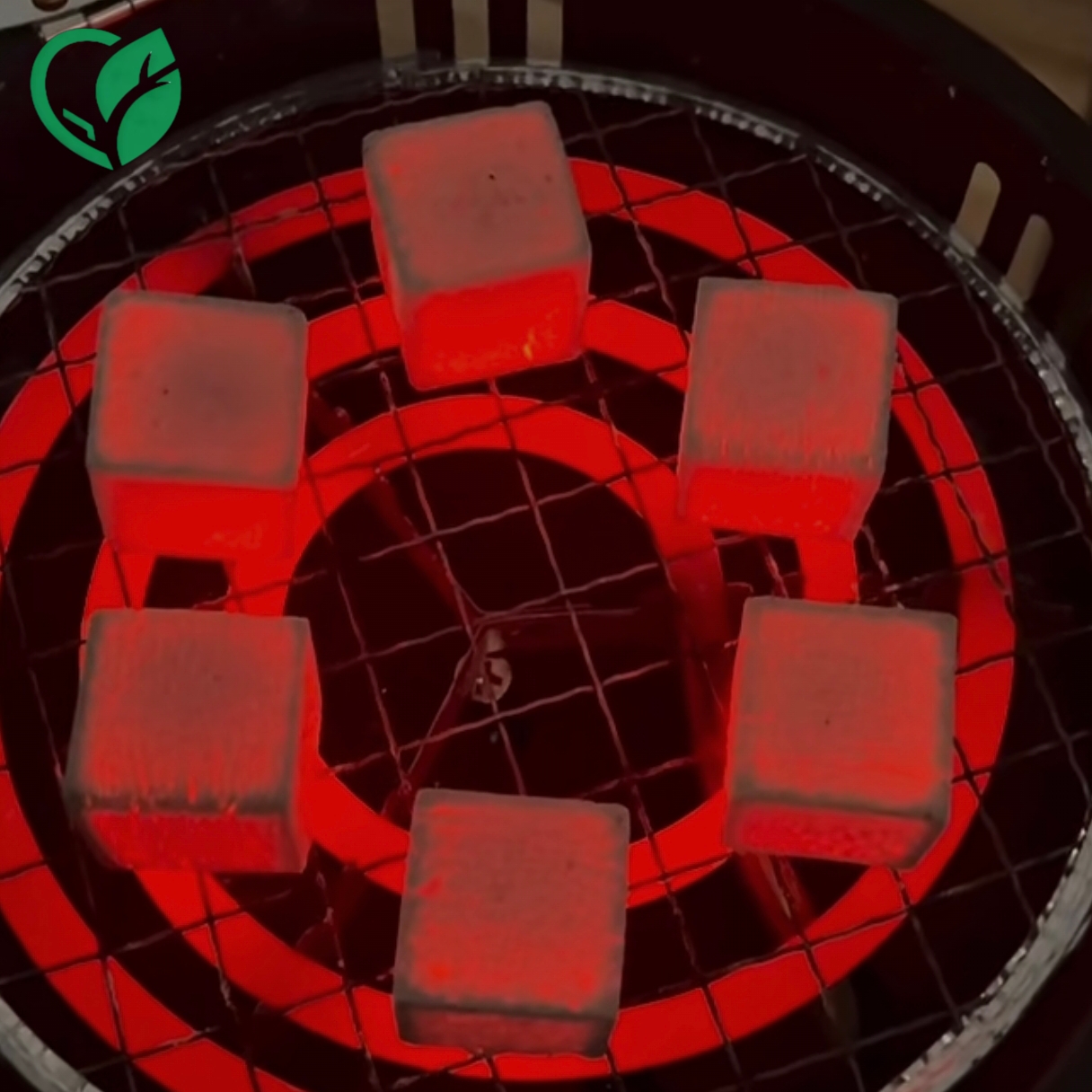 |
Shisha charcoal is a specially manufactured charcoal product designed to provide controlled and stable heat for hookah applications. The quality of charcoal directly affects burning duration, heat output, ash production, odor, and overall smoking experience.
For global buyers, distributors, hookah lounges, and private-label brands, selecting the right Hookah Charcoal requires more than choosing a charcoal type or comparing prices. Product specifications such as raw material, fixed carbon content, density, cube size, shape, burn time, and manufacturing consistency all influence final performance.
The market offers different types of shisha charcoal, including:
Coconut shell charcoal
Bamboo charcoal
Wood charcoal
Quick-light charcoal
Agricultural biomass charcoal
Among these options, Coconut Shell Shisha Charcoal has become one of the most widely used premium choices due to its high density, stable heat output, long burning time, low odor, and strong mechanical structure.
However, the “best” shisha charcoal is not determined by brand name alone. It should be evaluated according to actual specifications and application requirements.
This guide explains the major types of shisha charcoal, compares materials, introduces common sizes and shapes, explains important specifications, and helps buyers select suitable charcoal for retail, wholesale, and commercial hookah applications.
What Is Shisha Charcoal?
Shisha charcoal is a carbonized fuel product used as a heat source for hookah or shisha smoking.
Unlike ordinary charcoal used for grilling or industrial purposes, shisha charcoal is designed to provide:
Stable heat release
Controlled burning speed
Low ash production
Minimal odor
Consistent performance
During use, charcoal is placed above the bowl through foil or a heat management device. The generated heat transfers to the shisha tobacco mixture, allowing users to maintain a controlled smoking temperature.
High-quality shisha charcoal should have a balanced combination of:
Heat output
Burning duration
Ignition performance
Structural strength
Size consistency
For commercial users, consistency between production batches is especially important. A charcoal product that performs well in one shipment but changes significantly in another can create problems for distributors and hookah lounges.
Types of Shisha Charcoal
The main types of Shisha Charcoal can be classified by raw material and ignition method.
Different materials create different performance characteristics, while different ignition methods affect convenience and user experience.
Natural Shisha Charcoal
Natural shisha charcoal is produced from carbonized biomass materials without quick-lighting chemicals.
Common raw materials include:
Coconut shells
Bamboo
Hardwood
Sawdust
Agricultural shells
Natural charcoal is widely used by professional hookah users and lounges because it generally provides:
Longer burning time
More stable heat
Lower odor
Better heat management
However, natural charcoal requires an external heat source before use.
The final quality depends on:
Carbonization process
Raw material purity
Compression density
Moisture control
Production technology
Quick-Light Hookah Charcoal
Quick-light hookah charcoal is designed for easier and faster ignition.
Compared with natural charcoal, it offers:
Faster preparation
Easier operation
Greater convenience
This type is often selected by users who prioritize quick setup.
However, quick-light charcoal and natural charcoal serve different market needs.
For premium hookah lounges and long sessions, natural charcoal is often preferred because of its longer-lasting and more stable heat performance.
Coconut Shell Shisha Charcoal
Coconut Shell Shisha Charcoal is one of the most popular premium charcoal categories in the global shisha market.
It is produced from coconut shells through processes including:
Carbonization
Crushing
Powder processing
Mixing
Compression molding
Drying
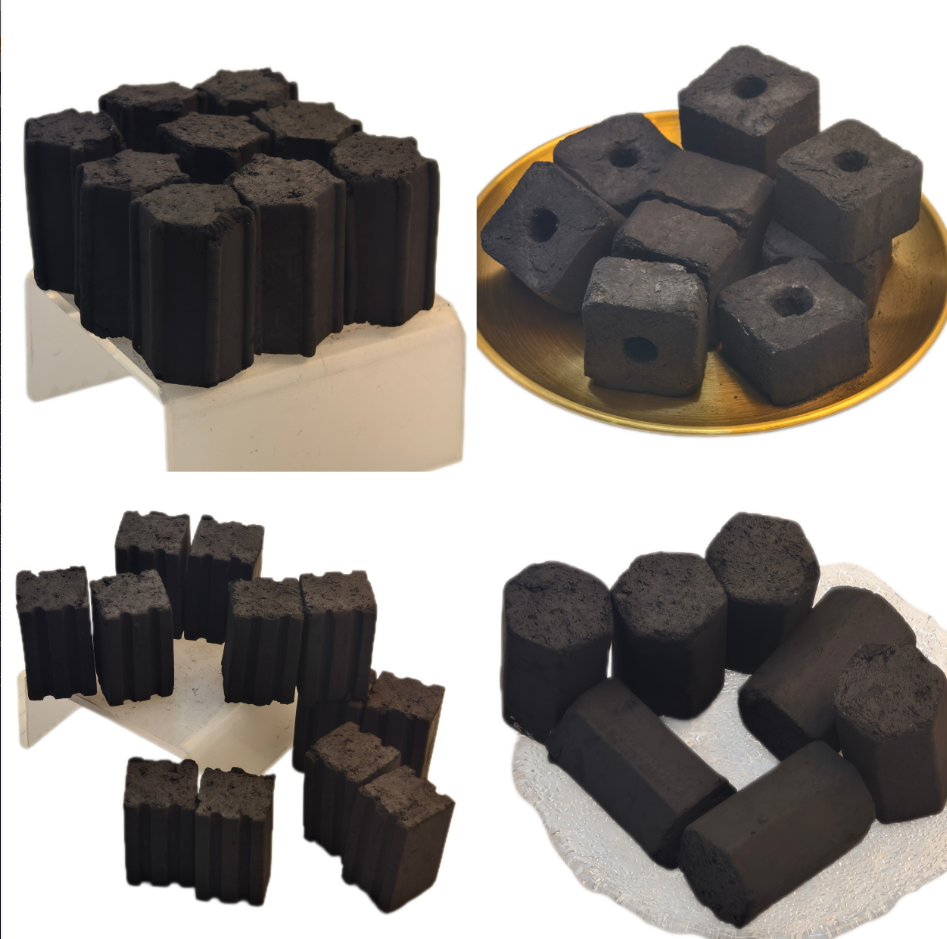
Common shapes include:
Cube charcoal
Flat charcoal
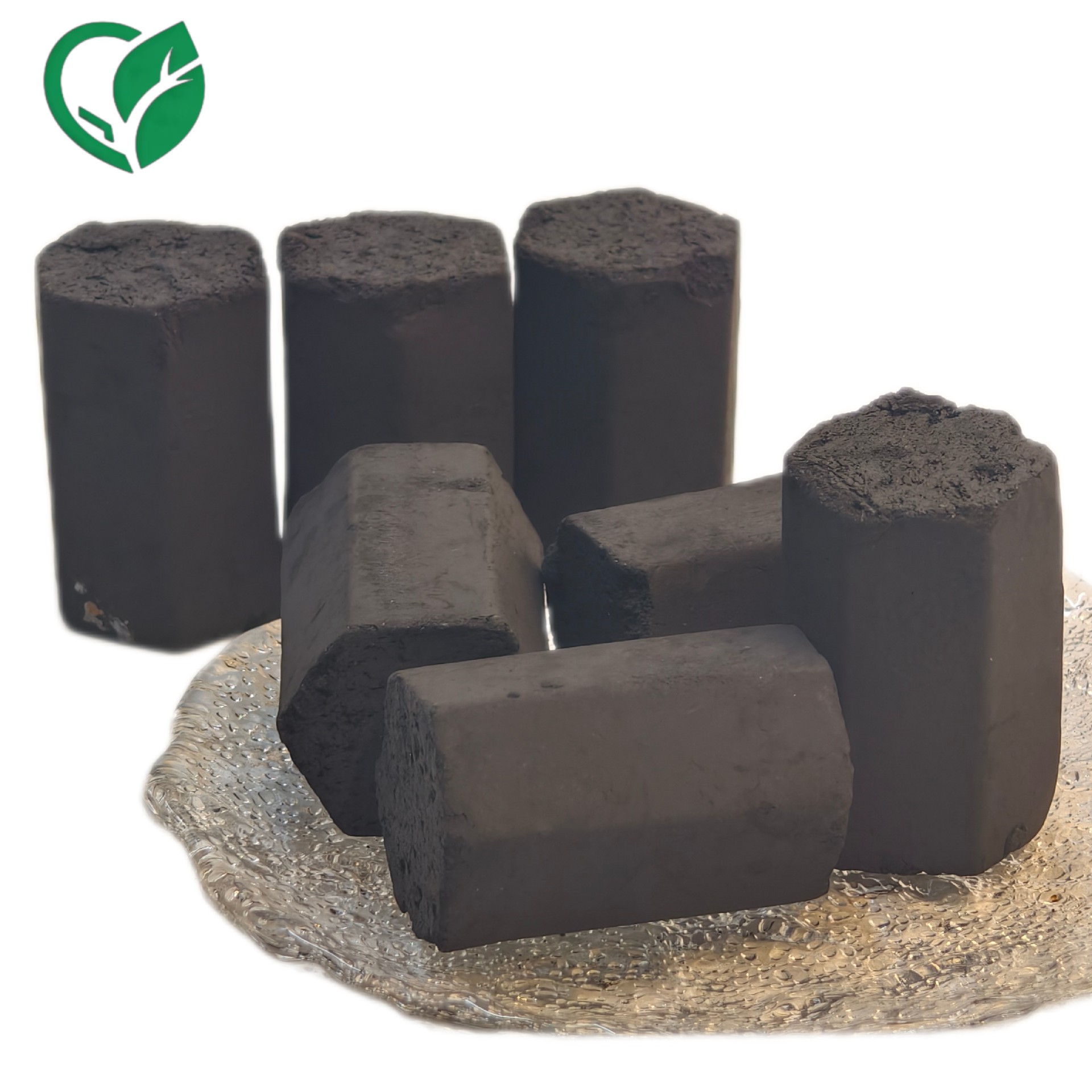
Hexagon charcoal
Finger charcoal
High-quality coconut shell charcoal is valued because coconut shells naturally create a dense carbon structure.
Key advantages include:
Long burn time
Stable heat output
Low ash performance
Neutral odor
Strong physical structure
For wholesale buyers and private-label brands, coconut shell charcoal is often selected for premium positioning.
Hookah Charcoal Materials: Coconut, Bamboo and Wood Comparison
The raw material behind hookah charcoal has a major influence on final performance.
Different materials have different market positions and characteristics.
| Raw Material | Main Characteristics | Common Market Position |
|---|---|---|
| Coconut Shell | High density, stable burning, low odor, long duration | Premium hookah charcoal |
| Bamboo | Renewable material, stable carbon structure | Regional and alternative markets |
| Wood / Sawdust | Flexible sourcing and pricing | Economy to mid-range products |
| Pistachio Shell | Agricultural biomass alternative | Regional specialty products |
Coconut Shell Charcoal
Coconut shell charcoal is widely used because it can achieve high density and stable combustion when properly manufactured.
Important characteristics:
Strong structure
Long burning time
Consistent heat release
Low flavor interference
These characteristics make it suitable for:
Hookah lounges
Wholesale distribution
Premium retail brands
Bamboo Charcoal
Bamboo charcoal can also be used for shisha applications.
Potential advantages include:
Renewable raw material
Good carbon content
Stable supply in certain regions
However, product performance depends heavily on:
Bamboo species
Carbonization process
Density
Manufacturing control
Therefore, buyers should evaluate finished-product performance rather than only the raw material source.
Wood Charcoal
Wood-based charcoal has a long history in charcoal production.
Its advantages include:
Broad raw material availability
Flexible production cost
However, performance varies significantly depending on:
Wood species
Carbonization temperature
Ash content
Manufacturing process
For commercial hookah applications, consistency testing is important.
Shisha Charcoal Sizes and Shapes Guide
The size and shape of charcoal directly influence:
Heat distribution
Burning duration
Airflow
Heat management
Compatibility with different bowls and devices
Selecting the correct charcoal size is therefore an important part of hookah charcoal purchasing.
Complete Guide to Cube Charcoal Sizes
Cube charcoal is the most common form of shisha charcoal.
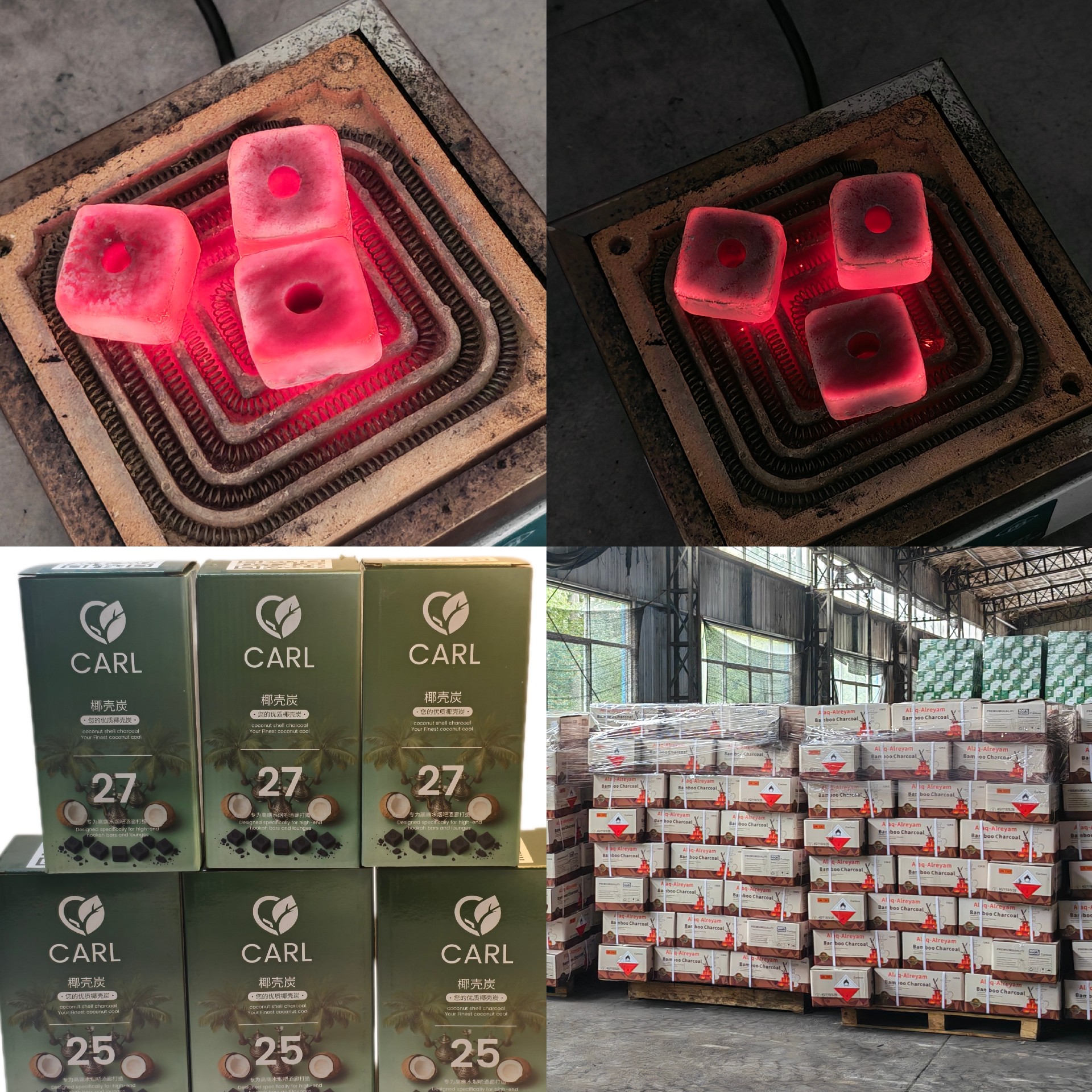
Common sizes include:
| Size | Typical Application |
|---|---|
| 22mm–25mm Cube | Faster heat adjustment, shorter sessions |
| 26mm Cube | Common commercial size |
| 27mm Cube | Balanced heat and duration |
| 28mm Cube | Longer sessions and higher heat demand |
Larger charcoal cubes generally provide:
Longer burning time
More stable heat release
Smaller cubes usually provide:
Faster heat adjustment
More flexible control
The ideal size depends on:
Bowl design
Heat management device
Session duration
User preference
Beyond Cubes: Specialized Shisha Charcoal Shapes
Although cube charcoal is the mainstream format, other shapes are also available.
Flat Coconut Charcoal
Flat charcoal provides a different heat distribution pattern and can be suitable for specific hookah setups.
Hexagon Charcoal
Hexagonal charcoal offers:
Larger surface contact area
Different airflow characteristics
Alternative visual appearance
Finger Style Charcoal
Finger charcoal is commonly used in certain regional markets and applications.
Quarter Circle Charcoal
Special shapes can be developed for specific equipment requirements or brand positioning.
For wholesale buyers, custom shapes can also support private-label product differentiation.
Shisha Charcoal Specifications Buyers Should Know
For wholesale buyers, distributors, and hookah lounge suppliers, Shisha Charcoal Specifications are more important than simply selecting a charcoal type.
A product may use the same raw material but show different performance because of differences in:
Carbonization process
Compression density
Moisture control
Additive formulation
Production technology
Quality management
Therefore, professional buyers should evaluate multiple specifications together instead of focusing on only one indicator.
Important specifications include:
| Specification | Why It Matters |
|---|---|
| Fixed Carbon Content | Indicates carbon concentration and potential burning performance |
| Ash Content | Affects cleanliness and user experience |
| Moisture Content | Influences ignition and storage stability |
| Density | Impacts burning duration and heat release |
| Burn Time | Determines practical usage duration |
| Ignition Time | Affects preparation convenience |
| Size Tolerance | Ensures consistent heat output |
| Mechanical Strength | Reduces breakage during transportation |
| Odor Performance | Prevents interference with shisha flavor |
Fixed Carbon Content of Shisha Charcoal
Fixed carbon content is an important quality indicator for charcoal.
A higher fixed carbon percentage generally indicates a higher proportion of carbon material after volatile components are removed.
For shisha-grade charcoal, fixed carbon affects:
Burning efficiency
Heat output
Burning stability
Overall charcoal quality
However, fixed carbon should not be evaluated alone.
A charcoal product with high fixed carbon but poor density or unstable structure may still perform poorly during actual use.
Professional evaluation should combine:
Fixed carbon
Density
Burn time
Ash content
Heat stability
Burn Time and Heat Output
Burning duration and heat output are two of the most important practical indicators for shisha charcoal.
A good charcoal product needs to balance:
Sufficient heat
Stable temperature
Long usable duration
A charcoal cube that burns extremely hot but finishes quickly may not provide a good user experience.
Likewise, a charcoal cube that lasts a long time but produces insufficient heat may not meet customer expectations.
For commercial applications, buyers usually focus on:
Effective burn time + stable heat output
rather than simply the longest possible burning duration.
Factors affecting burn time include:
Charcoal size
Density
Raw material
Compression pressure
Moisture level
Airflow conditions
Why Charcoal Shape and Size Matter for Shisha Performance
The shape and size of shisha charcoal influence how heat is transferred to the bowl.
Different specifications can affect:
Heating speed
Heat distribution
Session duration
Heat management requirements
Larger Charcoal Cubes
Larger cubes, such as 28mm charcoal, generally provide:
Longer burning time
More stable heat release
Less frequent replacement
They are commonly preferred for:
Longer sessions
Professional hookah lounges
Users who prefer stable heat
Smaller Charcoal Cubes
Smaller cubes provide:
Faster heat adjustment
More flexible temperature control
They can be suitable for:
Shorter sessions
Users who frequently adjust heat
Hexagon and Special Shapes
Different shapes can influence:
Contact area
Airflow around the charcoal
Heat distribution
For this reason, choosing the right charcoal shape should consider the complete hookah setup rather than appearance alone.
Matching Charcoal Size to Bowl Types and Heat Management Devices
The best charcoal size depends on how heat is transferred through the hookah system.
Important factors include:
Bowl size
Bowl material
Heat management device design
Session duration
Tobacco type
For example:
| Application | Recommended Consideration |
|---|---|
| Small personal setup | Smaller cubes may provide easier control |
| Standard hookah setup | 25mm–26mm cubes are commonly used |
| Long lounge sessions | Larger cubes may provide longer heat duration |
| Heat management devices | Size should match device capacity |
A mismatch between charcoal size and equipment may lead to:
Excessive heat
Insufficient heat
Faster charcoal consumption
Difficult temperature control
Why Premium Coconut Shell Shisha Charcoal Is Preferred
Coconut Shell Shisha Charcoal has become one of the most popular premium options in the international hookah market.
Its advantages come from the natural characteristics of coconut shell carbon and controlled manufacturing processes.
Long Burning Time
Coconut shell charcoal usually has a dense structure.
High density allows the charcoal to burn gradually and maintain usable heat for a longer period.
This is especially valuable for:
Hookah lounges
Commercial users
Long smoking sessions
Stable Heat Output
Premium coconut charcoal can provide consistent heat throughout the main burning period.
Stable heat helps users maintain better temperature control and reduces frequent adjustments.
Low Ash Performance
High-quality coconut charcoal generally produces relatively low ash compared with many lower-density charcoal products.
Lower ash helps:
Maintain cleaner operation
Reduce ash handling
Improve user experience
Actual ash performance still depends on:
Raw material purity
Production process
Carbonization conditions
Neutral Odor and Flavor Protection
One important reason many users prefer coconut charcoal is its ability to minimize unwanted odor.
Poor-quality charcoal may produce noticeable smells during ignition or burning, which can affect the shisha experience.
Properly processed coconut charcoal is often selected because it has relatively low odor and less impact on tobacco flavor.
Strong Structure
For international supply chains, mechanical strength is important.
High-quality coconut charcoal should resist:
Cracking
Powder formation
Transportation damage
This helps reduce losses during:
Packaging
Shipping
Storage
Retail distribution
Natural vs Quick-Light Shisha Charcoal
Natural charcoal and quick-light charcoal serve different user requirements.
| Feature | Natural Shisha Charcoal | Quick-Light Hookah Charcoal |
|---|---|---|
| Ignition | Requires external heating | Faster ignition |
| Preparation | Longer preparation time | More convenient |
| Burn Duration | Usually longer | Depends on product |
| Heat Stability | Generally stable | Depends on formulation |
| Typical Users | Lounges, premium users | Convenience-focused users |
For professional hookah lounges and premium markets, natural coconut shell charcoal is often preferred because of its stable performance.
Quick-light charcoal remains attractive where convenience and fast preparation are the main priorities.
How to Choose the Best Shisha Charcoal
Choosing the best shisha charcoal requires evaluating product specifications according to actual application requirements.
A reliable selection process should consider the following factors.
1. Identify Your Application
First determine where the charcoal will be used:
Retail products
Hookah lounges
Wholesale distribution
Private-label brands
Different applications have different priorities.
For example:
A lounge may prioritize:
Long burning time
Stable heat
Low ash
A retailer may prioritize:
Packaging
Brand positioning
Consumer convenience
2. Evaluate Raw Materials
Understand whether the product uses:
Coconut shell
Bamboo
Wood
Other biomass materials
Raw materials influence:
Density
Burning characteristics
Ash performance
Supply stability
3. Check Product Specifications
Important specifications include:
Fixed carbon
Ash content
Moisture
Density
Size consistency
Burn time
Requesting a product specification sheet is an important step before bulk purchasing.
4. Test Actual Burning Performance
Laboratory specifications are useful, but practical burn testing provides more realistic information.
Testing should evaluate:
Ignition behavior
Heat stability
Burn duration
Odor
Ash formation
Structural integrity
5. Consider Supplier Reliability
A suitable supplier should provide:
Stable production quality
Consistent specifications
Reliable delivery
Custom packaging capability
Export experience
The cheapest supplier may not always provide the lowest total cost if inconsistent quality causes customer complaints or product losses.
Wholesale and Private Label Shisha Charcoal
The global market for Wholesale Shisha Charcoal continues to grow as distributors, retailers and hookah lounges seek reliable supply partners.
Many businesses also require:
Custom packaging
Brand printing
Customized charcoal sizes
Customized shapes
Private-label production
Private Label Shisha Charcoal
Private-label projects allow companies to develop their own hookah charcoal brands without building their own manufacturing facilities.
A capable manufacturer should support:
Product customization
Packaging design
Quality control
Bulk production
International shipping requirements
Before choosing a supplier, buyers should confirm:
Minimum order quantity
Production capacity
Sample testing process
Packaging options
Quality documentation
Storing Shisha Charcoal in Humid Climates
Proper storage is important for maintaining charcoal performance.
High humidity can affect:
Ignition speed
Burning stability
Product weight
Packaging condition
Recommended storage practices include:
Keep charcoal in dry environments
Avoid direct exposure to moisture
Use sealed packaging
Store away from water sources
Maintain good warehouse ventilation
For international shipments, moisture-resistant packaging is especially important.
Shisha Charcoal Selection Mistakes to Avoid
Many buyers focus only on price and overlook performance factors.
Common mistakes include:
Choosing Only by Price
Lower purchase price may lead to:
Shorter burn time
More breakage
Higher consumption rate
Comparing Only One Specification
A high fixed carbon value or low ash value alone does not guarantee better performance.
A complete evaluation should include multiple parameters.
Ignoring Size Compatibility
A charcoal size that works well for one setup may not perform well in another.
Size selection should match:
Bowl type
Heat management device
Session requirements
Not Testing Before Bulk Orders
Large purchases should be based on representative samples and practical testing.
Frequently Asked Questions About Shisha Charcoal
What is shisha charcoal?
Shisha charcoal is a specially manufactured charcoal product used as a heat source for hookah applications.
Unlike ordinary charcoal, shisha charcoal is designed to provide:
Stable heat output
Controlled burning speed
Low ash production
Minimal odor
Consistent performance
Common raw materials include:
Coconut shells
Bamboo
Wood
Agricultural biomass materials
Among these options, coconut shell charcoal is widely used for premium hookah applications because of its density, burning stability and long-lasting heat performance.
What is shisha charcoal used for?
Shisha charcoal is mainly used to provide heat for hookah or shisha smoking.
The charcoal heats the shisha tobacco mixture through direct heat transfer, allowing users to control temperature and maintain the desired smoking experience.
Different charcoal specifications are suitable for different applications, including:
Home hookah use
Hookah lounges
Retail products
Wholesale distribution
Private-label hookah brands
What type of charcoal is best for hookah?
The best hookah charcoal depends on the intended application.
For premium hookah markets, Coconut Shell Shisha Charcoal is widely preferred because it typically provides:
Long burning time
Stable heat output
Low odor
Strong structure
Low ash performance
However, buyers should evaluate actual product specifications rather than choosing only based on raw material.
Important factors include:
Fixed carbon content
Burn time
Density
Ash level
Size consistency
Manufacturing quality
Is coconut shell charcoal better than bamboo or wood charcoal?
Coconut shell charcoal, bamboo charcoal and wood charcoal each have different characteristics.
Coconut shell charcoal is commonly selected for premium shisha applications because it offers:
High density
Stable burning performance
Long duration
Good mechanical strength
Bamboo charcoal can also provide good performance when manufactured properly.
Wood charcoal may offer cost advantages but performance can vary depending on:
Wood species
Carbonization process
Density
Ash content
The final product quality depends on both raw material and manufacturing control.
What are the standard sizes of shisha charcoal cubes?
Common shisha charcoal cube sizes include:
25mm cubes
26mm cubes
27mm cubes
28mm cubes
Different sizes provide different heat characteristics.
| Size | Common Application |
|---|---|
| Small cubes | Faster heat adjustment |
| 25–26mm cubes | Common commercial use |
| 27–28mm cubes | Longer sessions and stable heat |
The ideal size depends on:
Bowl type
Heat management device
Session duration
User preference
What shapes are available for hookah charcoal?
Common hookah charcoal shapes include:
Cube charcoal
Hexagon charcoal
Flat charcoal
Finger charcoal
Quarter-circle charcoal
Cube charcoal is the most widely used format because it provides predictable heat distribution and easy handling.
Special shapes may be developed for:
Different heat devices
Specific markets
Brand differentiation
Customized product requirements
Does shisha charcoal affect tobacco flavor?
Yes.
The quality of charcoal can influence the overall shisha experience.
Factors that may affect flavor include:
Odor during burning
Raw material quality
Carbonization level
Additives
Ash production
High-quality natural coconut charcoal is often selected because it produces minimal unwanted odor and reduces flavor interference.
What fixed carbon percentage should shisha-grade charcoal have?
Fixed carbon is an important specification for charcoal quality evaluation.
A higher fixed carbon percentage generally indicates a higher proportion of carbon material.
However, fixed carbon should not be evaluated separately.
A complete evaluation should also consider:
Density
Burn time
Ash content
Moisture
Mechanical strength
Heat stability
A charcoal product with excellent fixed carbon but poor structure may not provide the best practical performance.
What is the minimum burn time for premium shisha charcoal?
Burn time depends on:
Charcoal size
Density
Raw material
Production process
Heat management conditions
Premium coconut shell charcoal is generally selected because it can provide longer and more stable burning performance.
However, buyers should evaluate:
Effective heat duration
Heat stability
Usable burning period
rather than only the total burning time.
Can shisha charcoal be private labeled?
Yes.
Many manufacturers provide private-label shisha charcoal services for:
Hookah lounge brands
Distributors
Retail companies
Regional brands
Private-label options may include:
Custom packaging
Brand printing
Customized cube sizes
Custom shapes
Customized carton quantities
Before cooperation, buyers should confirm:
Production capacity
Minimum order quantity
Quality control system
Packaging capability
Export experience
How should shisha charcoal be stored in humid climates?
Humidity can affect charcoal performance by influencing:
Ignition speed
Moisture content
Burning stability
Recommended storage methods include:
Keeping products in dry warehouses
Using moisture-resistant packaging
Avoiding direct contact with water
Maintaining ventilation
Preventing long-term exposure to high humidity
Proper storage helps maintain charcoal quality during transportation and inventory periods.
Quick Specification Reference for Shisha Charcoal
For buyers comparing different suppliers, the following specifications provide a useful evaluation framework.
| Specification | Importance |
|---|---|
| Raw Material | Determines basic charcoal characteristics |
| Fixed Carbon | Indicates carbon concentration |
| Ash Content | Influences cleanliness and user experience |
| Moisture Content | Affects ignition and storage |
| Density | Influences burn duration |
| Cube Size | Determines heat distribution |
| Shape | Affects application compatibility |
| Burn Time | Determines practical usage duration |
| Mechanical Strength | Reduces breakage |
| Packaging | Protects product quality during shipping |
Final Guide: How to Select the Right Shisha Charcoal
Choosing the right Shisha Charcoal requires evaluating the complete product performance rather than focusing on one specification.
For professional buyers, the most important considerations include:
Raw material quality
Charcoal specifications
Size and shape selection
Burn duration
Heat stability
Ash performance
Odor control
Mechanical strength
Supplier reliability
Among different options, Coconut Shell Shisha Charcoal remains one of the most popular choices for premium hookah applications because it combines:
Long burning time
Stable heat output
High density
Low odor
Good structural strength
For wholesalers, distributors, hookah lounges and private-label brands, the ideal supplier should provide not only quality charcoal products but also:
Consistent production
Custom specifications
Reliable packaging
Stable supply capacity
A successful charcoal sourcing decision is not based on selecting the cheapest product. It depends on finding a product that delivers consistent performance throughout the entire supply chain.
By evaluating specifications, application requirements and supplier capabilities together, buyers can choose shisha charcoal that meets both market expectations and long-term business needs.
Recommended Reading
Shisha Charcoal Guide: Types, Performance and How to Choose the Right Hookah Charcoal
2026-09-03
2026-10-08
2026-09-20
Acid Washed Activated Carbon: Properties, Benefits, Applications and Selection Guide
2026-08-10
Activated Carbon Water Filter: How It Works, What It Removes, and How to Choose One
2026-07-08
Get a customized solution
Filling in your phone and email information will help us get in touch with you in a timely manner and resolve your issue as soon as possible.